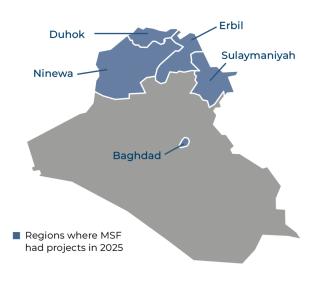
Our teams worked in West Mosul, Ninewa governorate, and the capital, Baghdad, providing essential services in a health system still recovering from decades of conflict and instability.
At Nablus field hospital, we provided comprehensive maternity services, including assistance with deliveries and emergency obstetric care, such as caesarean sections. We also offered emergency paediatric services and neonatal care, ensuring that newborns with complications received timely, lifesaving treatment.
At Al-Amal and Al-Ubur maternity clinics, MSF focused on maternal and reproductive healthcare. Services included antenatal and postnatal consultations, family planning, and health education sessions. Across both facilities, we integrated mental health support into our activities, comprising individual and group counselling, psychological first aid, and health promotion initiatives to address the psychological impact of years of violence and displacement. After years of providing care, and with a final donation of supplies, we handed over the Al-Amal and Al-Ubur maternity clinics to local health authorities in March and October, respectively.
In Baghdad, MSF continued to support the national tuberculosis (TB) programme through collaboration with the National Tuberculosis Institute. Our support included strengthening treatment protocols, training healthcare staff, ensuring a continuous supply of medications, and conducting screening activities in places of detention. These efforts aimed to improve early detection, treatment adherence, and the overall quality of TB care.